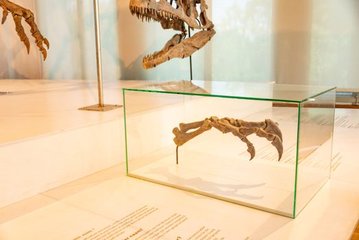
A prestigious collection of fossils sourced from Britain's renowned Jurassic Coast has been acquired by Abu Dhabi's Natural History Museum, representing what experts describe as a substantial loss to the nation's scientific heritage. The specimens, accumulated across decades from one of the world's most significant paleontological sites, will now be displayed internationally rather than remaining accessible to British researchers and institutions.
The sale underscores an accelerating trend in which private collectors increasingly dominate the market for significant fossil specimens. As auction prices climb to unprecedented levels, public museums find themselves systematically outpriced, raising concerns about the future of scientific inquiry and public education. This commercialization of paleontological discoveries has profound implications for access to irreplaceable scientific resources.
Scientists have voiced serious concerns about the broader implications for research. Paleontological studies depend fundamentally on access to specimens for examination, comparison, and discovery. When significant fossils enter private collections, the scientific community is denied opportunities for observation and analysis. The trend highlights ongoing tensions between commercial interests and the public good in the field of paleontology.