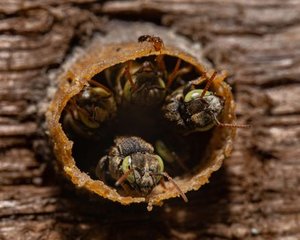
Long-running investigations into Fijian native bee populations have produced unexpected findings, according to research from Flinders University. The comprehensive study examined lowland sweat bees from the genus Lasioglossum, tracing their evolutionary trajectory across multiple generations. Rather than documenting decline, the research team documented remarkable resilience among several species that have successfully resisted human-driven environmental pressures.
While extreme weather events and landscape modification typically threaten endemic pollinators, certain species demonstrated unexpected robustness. Their idiosyncratic traits enabled them to not only persist but actually thrive under altered conditions. This phenotypic plasticity—where individual bees develop different physical characteristics in response to environmental cues—appears to have equipped these populations with a significant ecological advantage.
The findings challenge conventional assumptions about extinction vulnerability among specialized pollinators. By maintaining viable populations despite substantial habitat disturbance, these native species deliver critical ecosystem services without requiring conservation intervention. Their capacity to exploit novel niches dovetails with broader questions about evolutionary potential in changing environments, offering a natural model of adaptability that could inform future conservation strategies.