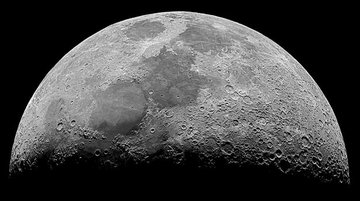
On 5 August, a fragment of a derelict SpaceX rocket collided with the lunar surface near Einstein Crater, carving a fresh scar. The Falcon 9 upper stage, launched in 2025, was travelling at roughly 5,400 mph. Astronomers welcomed the impact, with the European Southern Observatory recording sodium and lithium emissions in the debris plume. No harm resulted, so no one was held accountable, and the story soon faded.
The author, a veteran tracker of orbital debris, calls the crater a 'receipt' for an industry that treats the sky and Moon as a dumping ground. He argues that we do not own the Moon but behave as if we do, reflecting a colonial instinct. Previous impacts, such as a rocket body striking the Moon in 2022, have been dismissed as curiosities. Low Earth orbit is congested with tens of thousands of fragments, and Starlink's constellation alone exceeds all other operators' active satellites, leading to rising near misses.
The author contends that the problem is entitlement, not carelessness. We know better but proceed anyway, confident that no one will intervene. The Moon, lacking an atmosphere or tides, offers no natural cleansing; debris there is permanent. The fixes are neither exotic nor expensive, yet the industry persists in abandoning hardware. This mirrors imperial behavior: claim, extract, depart, leaving consequences for others. A new model of accountability and stewardship is imperative.