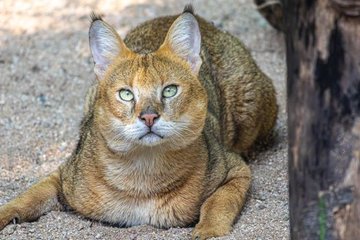
Wildlife photographer Mohammed Almuntasir uploaded 18 seconds of footage to YouTube in 2017, capturing a small, pale cat excavating a hollow in the sand dunes of southwest Libya. He gave the recording little thought at the time. What he could not have anticipated was that this modest contribution would become the first material evidence confirming the existence of Felis margarita within Libyan territory.
The sand cat represents the only felid species genuinely adapted to surviving in true desert conditions. Upon uploading the video, Almuntasir was met with widespread skepticism; no one accepted that the footage had been recorded in Libya. Nevertheless, he persisted in asserting the cat's presence across multiple locations in the region, one of which lay merely 70 kilometers from his home in Zintan. Nearly a decade subsequent to this initial documentation, accumulating evidence suggests southwestern Libya may constitute a previously unrecognized stronghold for the species.
Firas Hayder, a zoologist specializing in small carnivores and postdoctoral researcher at Sol Plaatje University in South Africa, subsequently contacted Almuntasir. They initiated a collaborative study aimed at formally documenting the animal's return to Libyan wildlife. Hayder had exhaustively reviewed all scientific literature referencing sand cats in Libya, discovering that none had provided any concrete evidence or geographical coordinates. The ecological significance of Libya's southwest is considerably diminished by the absence of protected areas, camera trap infrastructure, trained field teams, and a functioning central authority capable of coordinating research efforts across the territory.