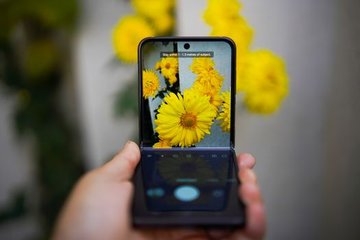
Apple has officially unveiled the iPhone Duo, marking the companys inaugural entry into the foldable smartphone market and representing the most significant redesign of the iPhone lineup since its inception in 2007. The device, which carries a price tag approaching $2,000, transforms through a passport-style folding mechanism that effectively doubles the screen real estate when opened. Upon opening, users are greeted with Apples largest ever phone display, while the device maintains the distinction of being the thinnest iPhone ever produced. The Duo essentially merges the expansive display experience popularized by the iPad with the convenience and photographic capabilities that have defined the iPhone brand.
The product launch serves as a pivotal first test for John Ternus, who assumed the role of chief executive from Tim Cook on September 1st. Addressing attendees at the Surprise and Shine event held at Apples Cupertino headquarters, Ternus positioned the Duo as a device that will fundamentally transform the foldable phone experience. He took the opportunity to critique existing market offerings, suggesting that competitor devices merely feel like two phones awkwardly joined together. Although Samsung and other manufacturers have dominated the foldable segment since the late 2010s, Apples entry signals a new competitive phase in this product category.
Alongside the Duo, Apple unveiled the iPhone 18 Pro and 18 Pro Max, priced starting at $1,199 and $1,299 respectively. The new lineup features enhanced artificial intelligence capabilities through Siri AI, which now integrates seamlessly with over 300,000 third-party applications. A notable security feature called Apple Reference Image acts as a digital negative, verifying that images were captured by the devices camera rather than generated through AI. Battery performance received substantial improvements, with the Pro Max delivering 45 hours of endurance and the standard Pro offering 36 hours. Despite the spotlight on foldables, industry analysts note that this category still represents only a marginal portion of total smartphone sales.