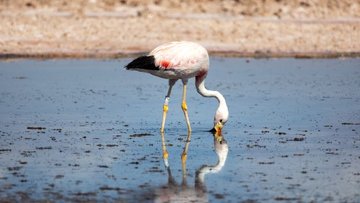
Straddling Argentina, Bolivia and Chile, the high-altitude plateau is a landscape of stark contrasts. Travelling by Jeep with two fellow researchers, the author describes thin, brisk air and piercing sunlight. Above the basin looms the Licancabur volcano. The Salar de Atacama, the largest of several dozen salt flats in northern Chile and the world's third largest, lies some 7,500 feet above sea level, enclosed by the Andes and the Domeyko range. Its flamingos and neighbouring Indigenous communities now face an unexpected threat: the drive to combat catastrophic climate change.
Beneath this expanse lies nearly a quarter of the world's lithium reserves, suspended in brine more saline than the ocean. Lithium is indispensable to decarbonising transport and energy, the two highest-emitting sectors, as a core component of rechargeable batteries. Its extraction, however, entails escalating social and environmental costs. The basin is endorheic: water flows in but can leave only by evaporation, and that very constraint concentrates the lithium. Rainfall leaches the metal from volcanic rock and wind-borne dust, while geothermal circulation dissolves further quantities from subsurface strata.
Miners pump the underground brine into vast evaporation ponds, where natural drying raises lithium concentrations roughly fortyfold, from around 0.15 per cent to 6 per cent. A single cycle can take between 10 and 24 months. Though relatively low-cost and low-tech, the process imperils the species and communities that inhabit the desert. It exemplifies a broader dynamic: wherever mining supplies the energy transition, global climate action collides with local environmental protection. Brine extraction is less visually dramatic than mountaintop removal, yet it threatens a fragile desert hydrology and those who depend upon it.