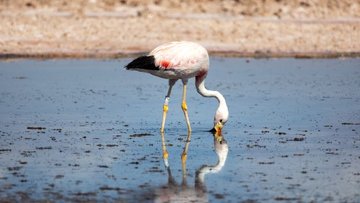
A high desert stretches across Argentina, Bolivia and Chile. I am on the Chilean side, riding in a Jeep with two other researchers. The air is thin and brisk, and the sun is piercing. The Licancabur volcano looms above us. Ahead lies the Salar de Atacama, the largest of several dozen salt flats in northern Chile and the third largest in the world. Its white surface sits about 7,500 feet above sea level. This striking landscape, with its flamingos and Indigenous communities, now faces a threat from our efforts to fight climate change.
Beneath the surface lies nearly a quarter of the world's lithium reserves, held in brine saltier than the ocean. Lithium is vital to the energy transition, as a key ingredient in rechargeable batteries that help cut emissions from transport and power. Yet its extraction brings rising social and environmental costs. The basin is closed: water can enter but can only leave through evaporation, which concentrates lithium over time. Rain washes lithium from volcanic rock down into the salar, and underground heat draws out even more.
Miners pump the underground brine into vast evaporation ponds, where the sun boosts lithium levels roughly fortyfold, from about 0.15% to 6%. A single cycle can take 10 to 24 months. Although this process is low-cost and low-tech, it still endangers the species and communities of the desert. It reflects a wider pattern: wherever mines supply materials for the energy transition, global climate action collides with local environmental protection. Brine mining is less dramatic than mountaintop removal, yet it threatens a fragile desert water system and the people who depend on it.