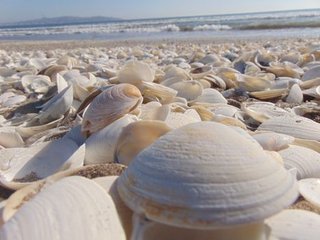
Researchers have confirmed the first established colonies of the invasive Manila clam (Ruditapes philippinarum) along the northwestern Atlantic coastline, marking the final region in the Northern Hemisphere to be colonized by this species. A collaborative team comprising scientists from the University of Massachusetts Amherst, MIT Sea Grant and the Center for Coastal Studies documented these findings in the journal Biological Invasions, providing a rare empirical record of an invasive species initially establishing itself in a novel environment and beginning to spread.
The native range of the Manila clam encompasses the coastal waters from Russia's Sakhalin Islands through Japan to southern China. Since the early twentieth century, however, the species has been inadvertently and deliberately introduced to coastlines throughout the Northern Hemisphere, including the American Pacific Coast and Europe. Prized for its culinary value across numerous cultures, the clam now constitutes a $7 billion annual industry. Nevertheless, these bivalves can displace native shellfish populations, hybridize with congeneric species and, at sufficiently high densities, fundamentally restructure local ecological communities.
Dr. Aly Putnam, a postdoctoral researcher at UMass Amherst and the study's lead author, noted that researchers had been anticipating the species' arrival. In the summer of 2025, while conducting an intertidal biodiversity workshop on Spectacle Island in Boston Harbor, Putnam received a text message from El Fernekees Hartshorn, a recent University of Rhode Island graduate who had previously participated in regional Rapid Assessment Surveys, featuring a photograph of what was subsequently identified as a Manila clam. Alongside Carolina Bastidas, a research scientist with MIT Sea Grant, Putnam surveyed the island and discovered abundant Manila clam shells. Separately, research led by Owen Nichols at the Center for Coastal Studies had been documenting reports of anomalous clams from local harvesters in Provincetown at Cape Cod's northern tip beginning in 2023.