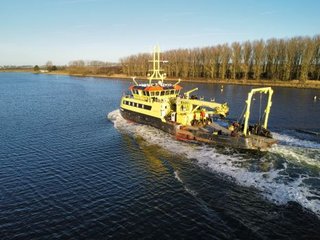
An international research team has documented 31 previously unidentified marine species during a two-week expedition conducted in the exclusive economic zone off Brazil's northeastern coast. The survey was carried out aboard the Falkor (too), a research vessel operated by the Schmidt Ocean Institute, with participation from two dozen taxonomic specialists representing institutions in the United States, Australia, Brazil, and Japan. Their investigations focused on the ocean midwater, the immense pelagic zone extending between the deep seafloor and the photic layer near the surface. This habitat constitutes approximately 90 percent of the biosphere's living space yet has been subjected to remarkably limited scientific inquiry despite its ecological significance.
The expedition's exceptional rate of discovery was facilitated by unprecedented technological capabilities deployed aboard the vessel. A spinning wheel confocal microscope system, colloquially termed the Squid, enabled researchers to visualize three-dimensional cellular architecture and intercellular interactions within living specimens without recourse to traditional staining and mounting procedures. The instrument, which employs laser scanning technology, permitted real-time observation of cellular processes that would ordinarily require weeks of laboratory preparation. Additional prototype imaging systems and genetic analysis protocols further accelerated species identification and documentation.
Among the specimens recovered were amphipods, siphonophores, ctenophores exhibiting bioluminescent ciliary structures, larvaceans constructing mucus dwellings, and giant rhizarians visible to the naked eye. Dr Karen Osborn of the Smithsonian National Museum of Natural History, who served as chief scientist, noted that the midwater biome harbors extraordinary biodiversity that remains poorly characterized. She suggested that the rapid pace of discovery may represent a near-record achievement in the field. These findings contribute substantially to scientific understanding of marine biogeography and the vertical distribution of organisms across oceanic depth gradients.