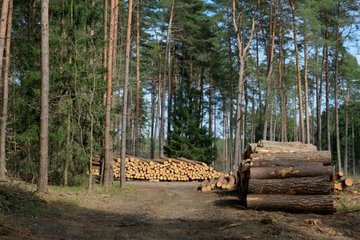
The global funeral industry is facing increasing pressure to adopt more sustainable practices as environmental concerns reshape how societies approach end-of-life arrangements. The ecological footprint of conventional methods proves substantial—in the United States alone, approximately 1.6 million hectares of forested land are cleared annually to manufacture coffins, an area comparable to Hawaii's entire landmass. This volume of timber could alternatively construct roughly 4.5 million residential homes. Beyond timber consumption, around 1.6 million tons of cement are utilized for grave construction each year. Cremation presents its own environmental challenges; a single cremation generates carbon emissions equivalent to driving a private vehicle approximately 3,369 kilometers. Compounding these concerns, numerous countries are experiencing critical cemetery space shortages.
Water cremation, technically termed alkaline hydrolysis, represents one emerging alternative gaining traction. This process involves treating the body with water heated to 170 degrees Celsius alongside an alkaline solution, effectively dissolving organic matter before the resulting remains are dried and processed into a fine powder, subsequently placed in an urn for family return. Scotland legalized this method in March 2026, with England and Wales currently examining its implementation. Additional jurisdictions permitting the practice include Australia, South Africa, several American states, Canada, and Ireland. Scotland's Public Health Minister Jenni Minto characterized the option as an environmentally friendly alternative.
Natural organic reduction, or human composting, offers another sustainable pathway. The process involves positioning the body within a sealed chamber containing desiccated organic materials such as hay, straw, or wood chips, where microbial activity transforms the remains into nutrient-rich soil. This resulting material undergoes further processing into smaller fragments before burial in a biodegradable wooden vessel. The approach is currently permitted in Ireland, Germany, and Australia.