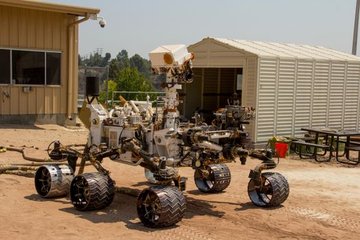
In September 2025, NASA announced that its Perseverance rover had detected a potential biosignature on Mars. This discovery was made in the Bright Angel rock formation. A biosignature is a substance or structure that might have a biological origin. Scientists were eager to analyze the findings further and confirm their significance.
Researchers have now published a comprehensive study in the journal Science Advances. The study confirms the detection of organic carbon in the same two rocks from the Bright Angel formation. Organic carbon consists of the basic chemical building blocks of life as we know it. This confirmation represents a major step forward in understanding the potential for past life on Mars.
The paper describes in detail what scientists can conclude about the organic matter found in these rocks. It provides a clearer picture of the chemical composition and structure of the detected materials. The findings suggest that Mars may have had conditions suitable for microbial life in its ancient past. However, scientists caution that more research is needed to determine the exact origin of these compounds.