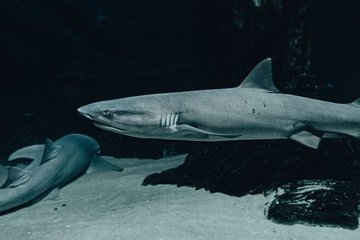
Dr Lucy Hawkes works at a university in England. She leads a new project. The project lasts three years. Her team wants to learn about sharks near Britain. There are three types. These are porbeagle, tope and blue sharks. "We have really cool sharks," she says. She likes the porbeagle. It looks like a baby great white shark. It is not dangerous to people.
More than 40 types of sharks live in British waters. Some are small. Some live deep in the sea. Others travel long distances. A huge basking shark also lives here. But people do not know much about most of these sharks. Scientists want to change this. They got almost £1m to do their work. They work with other groups too.
About three million people in the UK go fishing for sharks. These people help scientists. They report what they see. They catch sharks. Then they let them go. Scientists call these people citizen scientists. This means they help with science work. Angers take photos and measurements of sharks. They report all this data. This helps scientists understand shark populations. Scientists will also talk to many anglers across England.