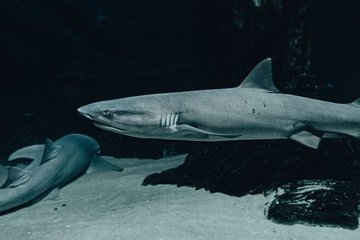
Dr Lucy Hawkes is an associate professor at the University of Exeter. She is co-leading a three-year project to study sharks in British waters. The team received nearly £1m from Natural England for their work. They will work with the Marine Biological Association and the Angling Trust. The project focuses on three vulnerable shark species: the porbeagle, the tope or school shark, and the blue shark. "I like the porbeagle, which looks like a baby great white shark," Hawkes says. She adds that surfers might be frightened by one, but these sharks pose no danger to people.
British waters are home to more than 40 shark species. These range from small catsharks and deepwater dogfish to the enormous filter-feeding basking shark. Migratory blue sharks also swim in these waters. Despite this diversity, scientists know very little about most of these creatures. The Exeter team plans to use historical records, electronic tags, and recreational sightings to learn where these sharks feed, mate, and migrate. They will also track how populations are changing over time.
The UK has about three million recreational anglers. These fishermen now practice catch and release with sharks. They measure live sharks before letting them go. Dr Francesco Garzon from the project says this is one of the best places in Europe to see sharks. Angler records are very important for science. Even if all shark researchers worked together, they could not collect the same amount of data. Scientists will run workshops and interview hundreds of anglers across England to gather more information.