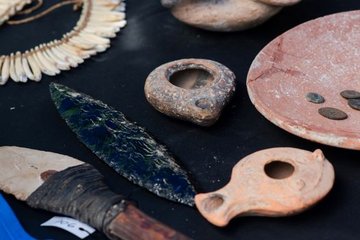
The proliferation of counterfeit archaeological artifacts presents mounting challenges for museums and collectors worldwide. Sophisticated forgery rings produce increasingly convincing replicas that evade traditional authentication methods. Researchers are deploying advanced spectroscopic imaging and radiocarbon dating techniques to expose these deceptions. These analytical approaches can identify microscopic inconsistencies in materials and manufacturing traces invisible to conventional inspection. Institutions are now integrating scientific validation protocols to safeguard collection integrity against sophisticated fraud.
Ecological research conducted on Caribbean islands has revealed compelling evidence linking hurricane activity to evolutionary pressures on lizard populations. Intense wind events systematically dislodge arboreal lizards from their perches, creating powerful selective filters. Studies demonstrate that survivors possess significantly larger adhesive toe pads conferring enhanced grip capacity. This survival advantage propagates through subsequent generations, gradually shifting population morphology. Long-term research suggests recurring hurricane activity functions as a driving force in lizard speciation and adaptation.
Prolonged heat exposure represents a escalating public health crisis affecting populations across multiple continents. Clinical data indicates substantial increases in emergency department admissions during extended heat waves. Elderly individuals and those with cardiovascular or respiratory conditions experience disproportionate morbidity during thermal stress events. Urban municipalities are implementing cooling infrastructure and early warning systems to protect susceptible demographics. Medical professionals advocate for preventive measures including hydration maintenance and activity restriction during peak temperature intervals.