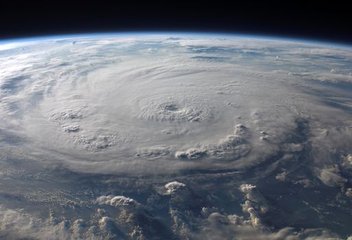
The Japan Meteorological Agency is closely monitoring two tropical cyclones approaching Japan from the south. Typhoon Mekkhala and Tropical Storm Higos are currently tracking northward across the Pacific Ocean. Both systems are expected to reach the Japanese archipelago within the next several days. What concerns meteorologists most is that their projected paths could bring them dangerously close together, raising the possibility of direct interaction between the two storm systems.
When two tropical cyclones approach each other, they can exhibit complex behavior that challenges conventional forecasting methods. The storms may diverge, meaning they push against each other and move away on separate courses. Alternatively, they might follow each other in succession along similar trajectories. The most concerning possibility is a merger, where the two systems combine into a single, potentially more powerful cyclone. Scientists use the term Fujiwhara effect to describe this type of interaction between rotating storm systems.
The prospect of converging storms has created significant uncertainty in weather forecasting models. Standard prediction tools assume single, independent storm systems and struggle to account for how two cyclones might influence each other's behavior. Emergency management officials must now prepare for multiple scenarios simultaneously. This makes resource allocation and evacuation planning considerably more complicated. Coastal communities face the possibility of experiencing impacts from either storm, both storms, or an unexpected merged system.