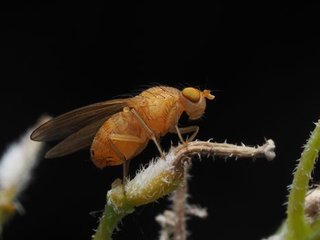
Fruit flies have two brain circuits that coordinate their wing and leg movements. These circuits work together to produce a threatening display. When a fly wants to scare a rival, it flaps its wings and moves its legs in a specific pattern. This makes the fly appear larger and more intimidating. Other flies see this and back away. The fly wins without a fight. This behavior is fast and automatic.
The fly uses this display for several purposes. It can protect its territory or food from other flies. It can also help attract a mate. The brain circuits act very quickly, without the fly needing to think. They are like an automatic program that tells the limbs what to do. The fly does not learn this behavior; it is built into its brain. This shows how simple brains can produce complex actions.
Scientists are studying these circuits to understand how the brain controls complex behaviors. The fruit fly's simple brain is a good model for this research. It may help us learn more about how our own brains control our arms and legs for actions like waving or dancing. The same principles might apply across species. Understanding the fly's circuits could reveal basic rules of brain function.