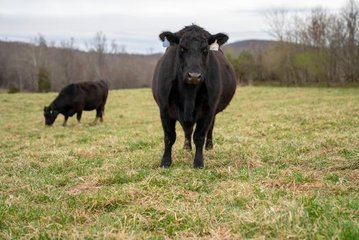
Researchers at the University of Göttingen investigated virtual fencing systems for cattle management. The Nofence system utilizes collars that deliver acoustic warnings followed by mild electrical pulses when animals approach preset boundaries. This technology provides farmers with a flexible alternative to conventional physical fencing. The study took place at a research farm in Relliehausen during 2021, involving 31 cows equipped with GPS tracking devices.
The research team examined the animals' movement patterns by segmenting the pasture into peripheral zones near the fence and central grazing areas. Their goal was to determine whether virtual boundaries influenced cattle behavior differently than traditional electric fences. Surprisingly, the results indicated that fence type was not the deciding factor. Rather, the simple existence of a boundary—whether visible or invisible—determined how cows distributed themselves throughout the field.
The findings revealed that cattle spent less time at pasture edges and moved more gradually when approaching boundaries, regardless of fence type. Virtual fences also encouraged more uniform distribution of animals across the grazing area. Lead researcher Dr. Natascha Grinnell emphasized that virtual fencing is respected by cattle just as reliably as traditional methods. This discovery suggests farmers could benefit from more flexible and efficient livestock management while maintaining acceptable animal welfare standards.