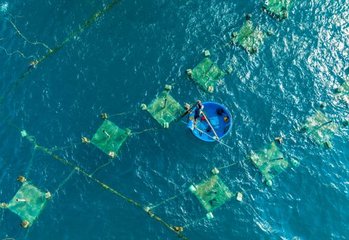
The UN Food and Agriculture Organization has unveiled ambitious plans to expand global aquaculture production by 75 percent by 2040 as part of its blue transformation agenda. The initiative seeks to meet growing seafood demand, enhance food security, and eliminate world hunger. However, an analysis published by the Changing Markets Foundation reveals that achieving this target could require converting nearly half of the world's annual wild fish catch into fishmeal and fish oil for farmed species. Carnivorous aquaculture species such as salmon and shrimp depend heavily on these feed inputs, which are derived from grinding down smaller forage fish including anchovies and sardines. The report warns that such expansion would place unprecedented pressure on already overexploited marine ecosystems.
Joint modeling conducted with the University of British Columbia indicates that, under current industry trajectories, up to 34.6 million tonnes of wild fish could be harvested annually to support farmed species by 2040. In scenarios weighted toward feed-intensive production systems, this figure could escalate to 41.4 million tonnes, equivalent to 46 percent of the 2020 global wild-fish catch. While producers have reduced the wild-fish conversion ratio per kilogram of farmed output, the aggregate consumption continues to climb alongside industry expansion. Tara Ganesh of the Changing Markets Foundation emphasizes that fishmeal and fish oil remain essential to carnivorous species, despite industry claims of improved sustainability.
Muhammed Oyinlola, an aquatic ecologist at the University of British Columbia, argues that the projected impacts are not inevitable. Diversifying toward lower-input species could substantially mitigate ecological damage. The FAO has yet to specify which species or production systems should deliver the mandated growth, and its sustainable aquaculture guidelines fail to provide concrete implementation pathways. The report further documents that nutritional and food security safeguards were quietly removed from successive guideline drafts. At a December 2023 FAO workshop in Ghana, representatives of small-scale fisheries advocated for reserving sardinella for direct human consumption and halting fishmeal factory expansion.