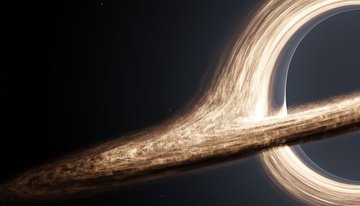
Researchers have finally solved the puzzle of when black holes emit jets after consuming stars. These cosmic objects are so densely compacted that their gravitational pull prevents even light from escaping beyond a certain point—the event horizon. When stars venture too close, they experience spaghettification, being stretched into thin streams by extreme tidal forces. Dr. Adelle Goodwin, an astrophysicist at Curtin University, notes that black holes are surprisingly inefficient feeders, with much stellar material destroyed well outside the event horizon.
Observations reveal that approximately half of a disrupted star is eventually swallowed, while the remainder is expelled into space as powerful relativistic jets capable of traveling across vast cosmic distances. These outflows can profoundly influence galactic evolution. The timing of such emissions had long puzzled astrophysicists, with 'burps' occurring anywhere from one to five years following stellar disruption. Goodwin describes the phenomenon as analogous to the cosmic equivalent of a hasty meal followed by an unexpected belch.
In research published in Nature Astronomy, Goodwin and colleague Dr. Andrew Mummery analyzed 20 tidal disruption events using radio telescopes, the only frequency capable of tracking expanding jets. Their findings demonstrate that supermassive black holes launch jets in two sequential phases—first during peak accretion rates, then hundreds to thousands of days later when feeding diminishes to roughly 2% of maximum capacity. Remarkably, this same threshold governs jet ejection in stellar-mass black holes. The discovery enables precise prediction of jet release timing, significantly improving observational efficiency and deepening our understanding of jet formation mechanisms across different black hole masses.