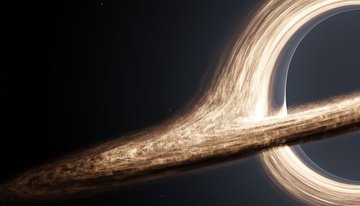
Scientists have discovered when black holes 'burp' after feeding on stars. Black holes are extremely dense objects in space with gravity so strong that nothing can escape, not even light. This boundary is called the event horizon. When a star drifts too close, the black hole's immense gravity tears it apart in a process called spaghettification. Researchers describe black holes as 'messy eaters' because much of the star material gets destroyed before reaching the event horizon.
Studies show that only about half of a star gets swallowed by the black hole. The remaining material gets ejected back into space in powerful jets and outflows. These jets can travel enormous distances and sometimes influence the entire evolution of a galaxy. The timing of these cosmic 'burps' puzzled scientists for years, as they sometimes occurred a year after the star was destroyed, and other times three to five years later.
Researchers from Curtin University and the Institute for Advanced Study published their findings in Nature Astronomy. They studied 20 tidal disruption events using radio telescopes. They discovered that black holes release jets in two distinct phases. The first occurs during rapid feeding, while the second happens when the feeding rate drops to about 2% of maximum. This same threshold triggers burps in both supermassive and smaller stellar-mass black holes, allowing scientists to predict when these powerful jets will be released.